

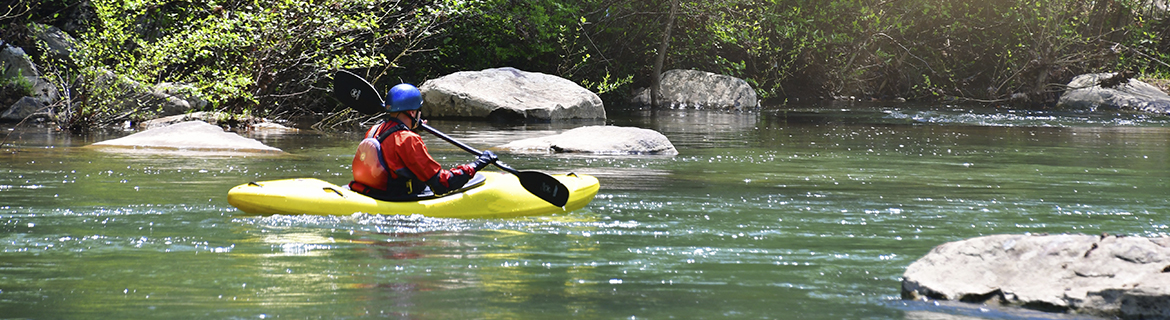
Getting started with paddling can feel intimidating at first, but kayaking, canoeing and paddle boarding are all easier than they look. The key is to begin in calm water, move slowly and focus on control rather than speed.
For beginners, flat water is the best place to learn. A quiet river, small lake or protected shoreline gives you time to understand balance, steering and paddling without dealing with strong current or waves.
Before going out, it is important to check the weather, especially the wind. Even a light breeze can make the return trip harder than expected. A properly fitted life jacket is also essential, even for confident swimmers. New paddlers should stay close to shore, avoid fast-moving water, and tell someone where they are going.
Starting With a Kayak
Kayaking is often the easiest option for solo beginners. A recreational kayak is usually stable, simple to control, and comfortable for short trips. Getting in should be done from shallow water, with the boat held steady and body weight kept centered.
Once seated, the movement is simple. The paddle is held with both hands, and each stroke moves from near the feet back alongside the kayak. Alternating left and right creates a smooth rhythm. Beginners often try to paddle too hard, but kayaking works better when the movement stays relaxed and steady.
Steering becomes easier with practice. Paddling more on one side turns the kayak in the opposite direction, while shorter strokes help make small corrections. Good posture matters as well. Sitting upright and looking toward the place you want to go helps the body stay balanced.
Canoeing for Pairs and Families
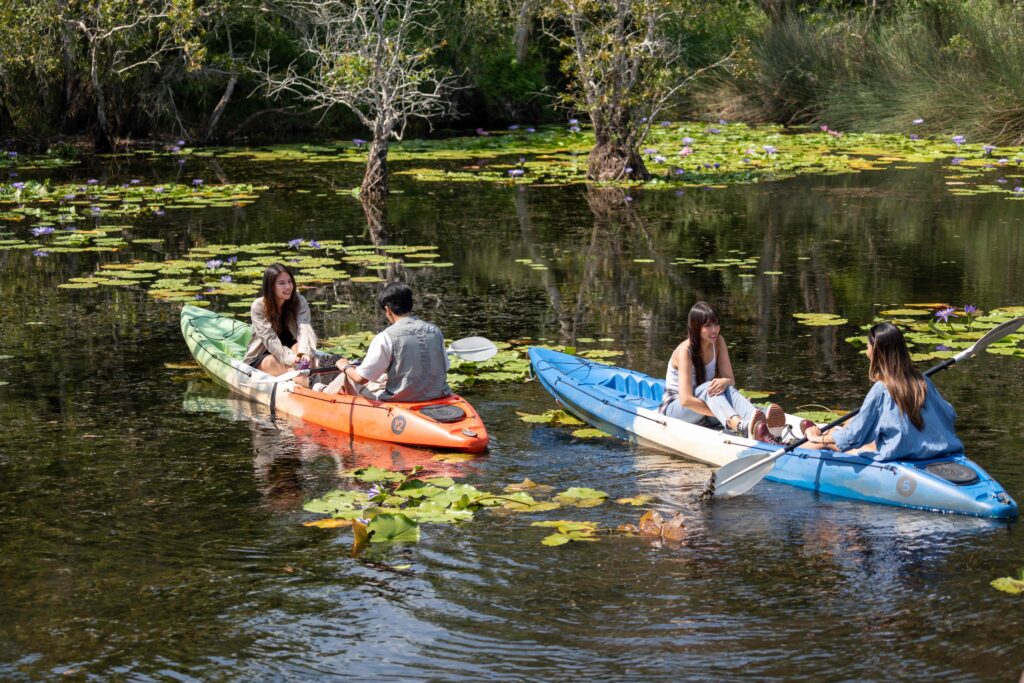
Canoeing is a good choice for two people, families, or anyone carrying more gear. It offers more open space than a kayak, but it can feel less stable if people move too quickly. The best approach is to enter slowly, keep weight balanced, and avoid sudden shifts from side to side.
In a two-person canoe, the back paddler usually controls direction, while the front paddler adds power. Communication is important because random movement or mismatched paddling can cause the canoe to zig-zag. A canoe uses a single-blade paddle, so rhythm matters. Smooth, even strokes work better than force, and the back paddler can help the canoe travel straight by using a J-stroke, which adds a small outward motion at the end of the stroke.
Trying Stand-Up Paddle Boarding
Stand-up paddle boarding looks more difficult, but it can be very beginner-friendly on calm water. The board should be launched deep enough so the fin is fully underwater. The fin helps the board track straight and makes steering easier.
Most beginners should start on their knees. This gives time to feel how the board moves before standing. Once stable, standing up should be slow and controlled, with feet about shoulder-width apart and knees slightly bent.
Looking down is a common mistake because it makes balance worse. Looking forward helps the body stay relaxed and steady.
Falling in is normal, especially at the beginning. The goal should not be perfection. It should be comfort, balance, and confidence.
First-Trip Planning
Wind is one of the biggest surprises for new paddlers. A route that feels easy in one direction can become tiring on the way back if the wind changes or pushes against you. For that reason, it is usually better to start by paddling into the wind, then return with help from it.
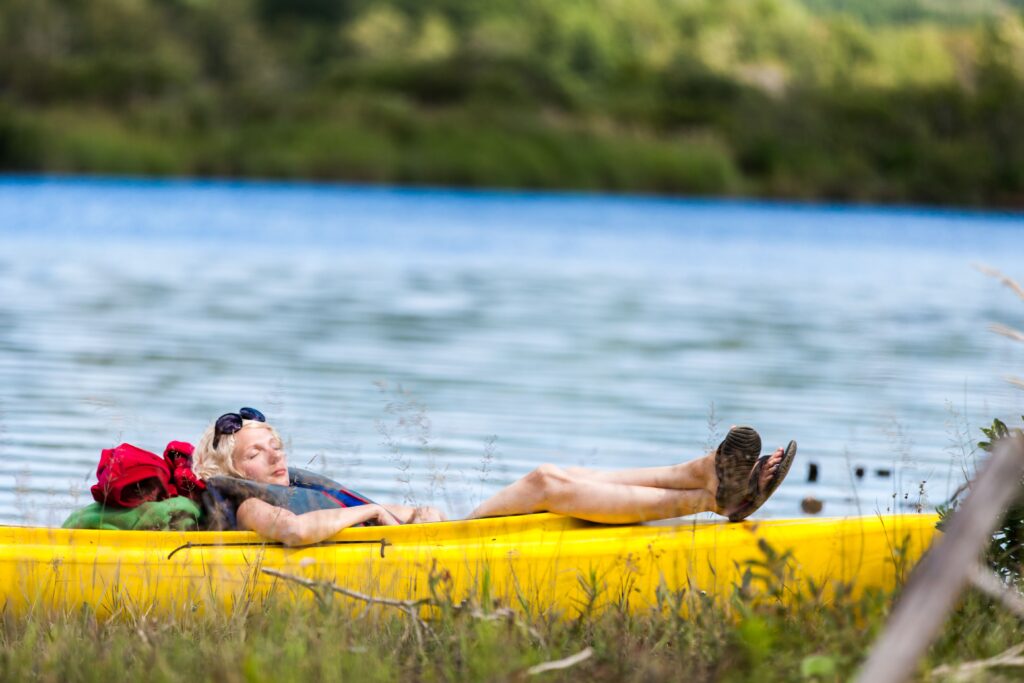
Distance should also stay modest on a first trip. Half your energy should be saved for the return, especially on open water. Bring water, sun protection, snacks and a dry place for your phone or keys. The goal is not to test endurance, but to finish the trip feeling confident enough to go again.
Choosing the Right Paddle Activity
A kayak is usually the best first choice for solo paddlers. A canoe is better for pairs, families, and carrying extra gear. A paddle board is ideal for people who want a little challenge and do not mind getting wet.
Paddling becomes enjoyable once the first few minutes pass. With basic safety, calm water and a relaxed pace, kayaking, canoeing and paddle boarding can become simple, peaceful ways to spend time outdoors.